
The Doors: Unbound and Dangerous
A lifelong Doors fan revisits Unbound and Dangerous and explores seven standout concert albums, explaining why the band’s music keeps revealing something new.

A lifelong Doors fan revisits Unbound and Dangerous and explores seven standout concert albums, explaining why the band’s music keeps revealing something new.

Growing up, a Tex Avery cartoon meant something special was about to happen. Discover the legendary animator’s outrageous humour and the MGM cartoon collection celebrating his enduring legacy.

Step inside Sunset Sound with The Doors as early takes of “Moonlight Drive” and “Indian Summer” reveal the experimentation, studio banter and unexpected magic behind two future album tracks.

Anthony Perkins had a musical secret lurking beyond Psycho. Listen to his early jazz career, 1950s hit “Moon-Light Swim,” and rare recordings emerging from the shadows.




2001: A Space Odyssey changed cinema and art in 1968. Jim Morrison and the Doors were present at the world premiere in Los Angeles. Both Ray Manzarek and Jim Morrison graduated as film students from UCLA. This was a big cinematic experience for them.

Bob Mankoff shares why human judgment, empathy, and humor remain irreplaceable as AI transforms creativity for artists and creators.

Roy Lichtenstein’s Pop Art legacy takes center stage at the Whitney Museum’s Like New exhibition, exploring comic books, originality and today’s AI art debate.

Find the best free pumpkin carving stencils for Halloween, from classic jack-o’-lantern faces to cats, monsters and printable pop culture designs.

It’s the Great Pumpkin, Charlie Brown reveals a surprisingly dark Halloween story about disappointment, faith, childhood cruelty and the kindness that can make things better.

August Lamm’s You Don’t Need a Smartphone sparks a funny, personal look at digital dependence, analog living, privacy and our obsession with apps.


That question has haunted Jeff Finn since 1985 when he first researched the infamous vocalist and lyricist of the legendary 1960s rock band, The Doors. Finn is the writer, director and narrator of Before the End: Searching for Jim Morrison, a forthcoming limited film series that rips the hinges off Morrison's purported official story. Indie film production company Z-Machine has released a new extended preview of this hard-boiled but empathic documystery. What If everything we think we know about Jim Morrison is wrong?

Why did Wonder Woman fly an Invisible Plane? Explore its Amazonian technology, mythic influences, alien tech and changing role across DC Comics history.

Old cookbooks weren’t always harmless. Some mixed food, medicine and household chemistry in ways that can make Grandma’s apple pie look downright safe.

During the Siege of Paris, starving Parisians ate zoo animals. Here’s the bizarre story behind elephant, camel and kangaroo appearing on a Paris menu.

America has so much stuff that we now pay to store it. A funny look at self-storage, consumerism, collecting, George Carlin and our obsession with stuff.

That stupid little pocket in your jeans has a long history, from pocket watches and the real 5th pocket to its cheeky modern reputation as the condom pocket.


The winking chef on pizza boxes has a surprising origin. Learn how Gill Fox’s 1950s illustration became a timeless pizza industry icon.

Did you know most people play Monopoly wrong? Discover the official rules, avoid common mistakes, and master winning strategies to dominate every game. Next time do not just go through the motions. Stick to the official rules.

Meet Vampira, the iconic horror host who helped make monster movies television magic, alongside Elvira, Zacherley, Svengoolie and Count Floyd.

Angine de Poitrine-inspired Halloween costumes were pulled from Party Expert stores after a reported legal threat.

Harry Houdini died on Halloween in 1926, but he wasn’t alone. Explore the famous figures who died on October 31 and Houdini’s final escape pact.

When did 81 become young? A funny look at aging, retirement, baby boomers and how our idea of old age keeps changing.


A lifelong Doors fan revisits Unbound and Dangerous and explores seven standout concert albums, explaining why the band’s music keeps revealing something new.
Roy Lichtenstein’s Pop Art legacy takes center stage at the Whitney Museum’s Like New exhibition, exploring comic books, originality and today’s AI art debate.

Find the best free pumpkin carving stencils for Halloween, from classic jack-o’-lantern faces to cats, monsters and printable pop culture designs.

Growing up, a Tex Avery cartoon meant something special was about to happen. Discover the legendary animator’s outrageous humour and the MGM cartoon collection celebrating his enduring legacy.

It’s the Great Pumpkin, Charlie Brown reveals a surprisingly dark Halloween story about disappointment, faith, childhood cruelty and the kindness that can make things better.
August Lamm’s You Don’t Need a Smartphone sparks a funny, personal look at digital dependence, analog living, privacy and our obsession with apps.
Step inside Sunset Sound with The Doors as early takes of “Moonlight Drive” and “Indian Summer” reveal the experimentation, studio banter and unexpected magic behind two future album tracks.
Anthony Perkins had a musical secret lurking beyond Psycho. Listen to his early jazz career, 1950s hit “Moon-Light Swim,” and rare recordings emerging from the shadows.
Godzilla stomps into classic fairy tales in Katherine Locke and Nikolas Ilic’s Godzilla Stomp!, a monster-sized children’s picture book full of chaos.
Meet Vampira, the iconic horror host who helped make monster movies television magic, alongside Elvira, Zacherley, Svengoolie and Count Floyd.
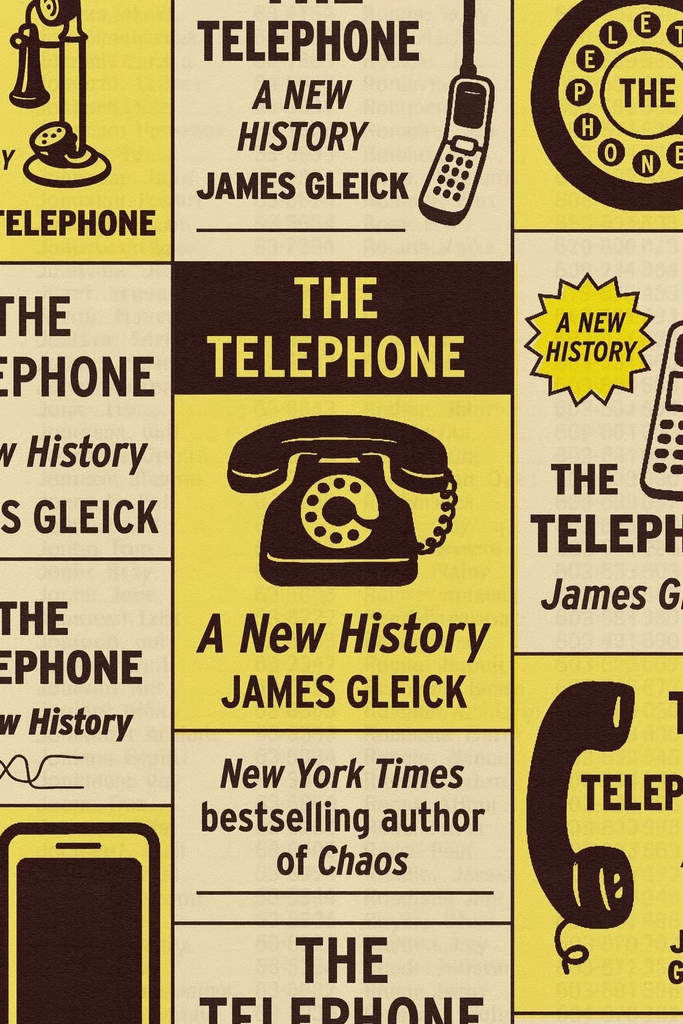
James Gleick’s upcoming The Telephone: A New History explores how the telephone transformed human connection, from Bell’s “ahoy” to the smartphone we can’t seem to silence.

Jake Tapper’s graphic novel The Butcher explores how Nazi war criminal Klaus Barbie escaped justice, with a story that began during a family trip to France.
![A retro-style graphic with a red background featuring a man in a suit shouting into a megaphone. The text reads: "CHATFISHING [chat-fish-ing] noun Using AI to write romantic messages that can make someone seem more charming or attentive than they really are."](https://i0.wp.com/sandboxworld.com/wp-content/uploads/2026/10/Chatfishing.png?fit=1600%2C775&ssl=1)