
The Business of Batman
Part Three of a three-part Sandbox World series exploring the practical questions comic books never stop to ask.
I honestly thought I was finished after writing about Batman’s accounting department and Gotham’s economy. Then another question popped into my head, and before I knew it I was imagining what Monday morning must look like inside Wayne Enterprises. If Bruce Wayne’s company quietly helps make Batman possible, what must it actually be like to work there?
The more I pictured it, the less Wayne Enterprises looked like a comic book headquarters and the more it looked like every office building I’ve ever walked into. People arrive carrying coffee. Someone is already running late for a meeting. Two employees are talking about the weekend while another waits impatiently for the elevator. A receptionist answers the phone with a smile while a courier wheels another confidential delivery through the lobby. Everything feels perfectly ordinary, which is probably the strangest part of the whole story because somewhere beneath everyone’s feet sits the Batcave.
The receptionist probably has the easiest job in Gotham and the hardest at the same time. Someone calls asking if Bruce Wayne is available for a meeting. Another visitor wants to know if Lucius Fox is in the building. A delivery driver arrives with several crates marked for a restricted research division that nobody ever seems to talk about. It’s just another Monday morning, except this office happens to support Gotham’s most famous billionaire without realizing what he does after dark.
If I could spend an afternoon wandering around the building, I’d head straight for Procurement because I honestly don’t know how anyone there keeps a straight face. At some point, somebody has to notice that Wayne Enterprises keeps ordering aerospace-grade titanium, reinforced ceramic armour, military electronics, advanced communications systems, and enough grappling cable to climb a mountain. Maybe the questions stop after a while. Maybe Lucius Fox signs another purchase order, thanks everyone for their hard work, and somehow every explanation makes perfect sense.

On my way to the next floor, I’d probably pass the coffee machine, and that’s where I imagine the best conversations happen.
“Did you hear Research ordered another shipment of titanium?”
“Again?”
“Apparently.”
“What are they building this time?”
“No idea.”
The conversation ends with a shrug because deadlines still have to be met, meetings are about to start, and curiosity doesn’t appear anywhere in the employee handbook.
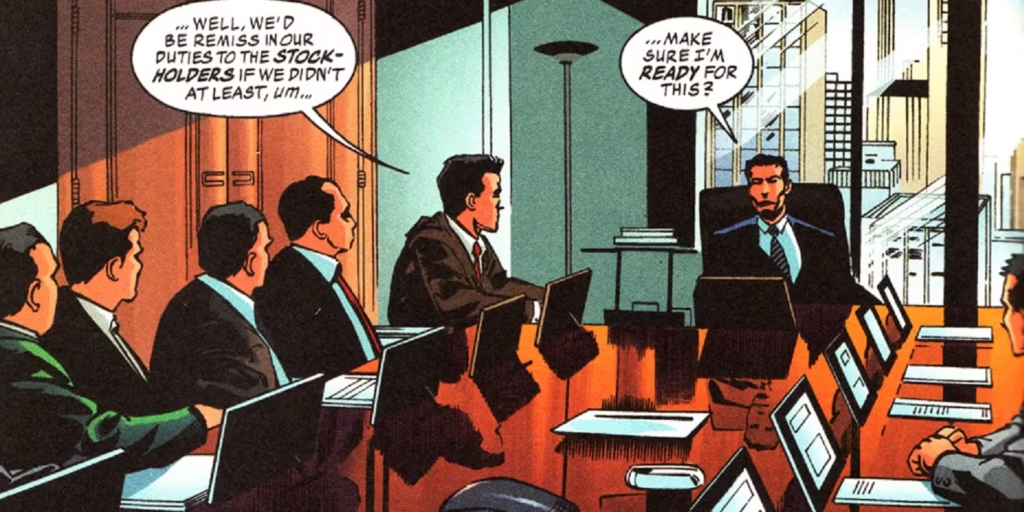
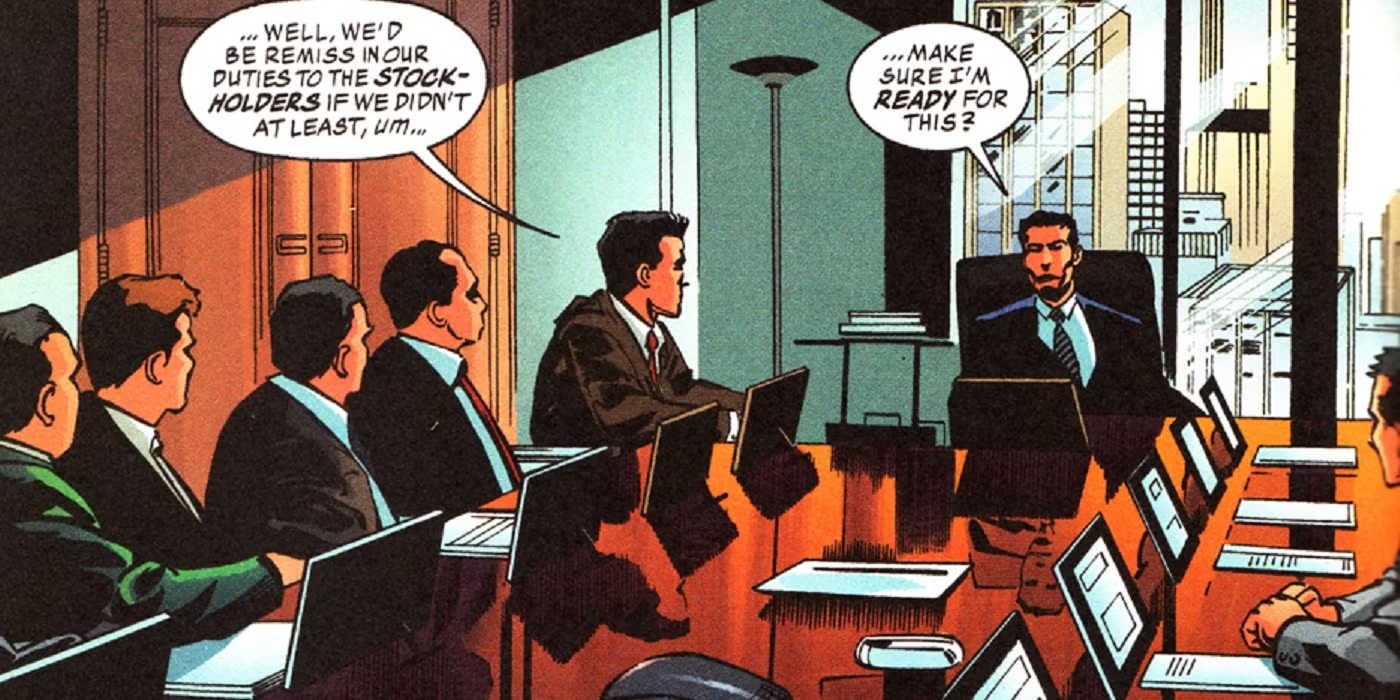
Human Resources must have developed an entirely different definition of “unusual workplace behaviour.” Bruce Wayne arrives late, disappears without notice, cancels meetings at the last minute, and occasionally shows up looking like he lost an argument with a freight train. Most companies would insist their CEO slow down. Wayne Enterprises probably waits for Alfred’s call.
“Good morning. Mr. Wayne won’t be attending today’s board meeting.”
“I’m sorry to hear that. Is everything all right?”
“I’m sure he will recover.”
“Recover from what?”
“…a rather athletic evening.”
Somehow, everyone accepts the explanation, updates the schedule, and carries on with the rest of the day.
The deeper I wandered through this imaginary building, the more I became convinced that everyone at Wayne Enterprises has mastered the same skill. They know how to recognize something unusual without feeling the need to explain it. Engineers solve technical problems. Buyers negotiate contracts. IT specialists quietly deal with another mysterious spike in overnight network activity. Nobody knows the whole story because nobody needs to. Each person simply does their job, trusts the people around them, and moves on to the next task.
Then I reached the Finance department, and I found myself thinking about the same accountant who quietly appeared back in the first article. They’ve worked at Wayne Enterprises for years. They know every policy, every budget code, and every reporting requirement. Another confidential project lands on the desk. Reinforced armour. Prototype vehicle components. Aerospace materials. Advanced communications systems. Every invoice matches the purchase order. Every approval has been signed. Every number balances exactly the way it should.
The accountant leans back, closes the file, looks toward the window for a moment, and smiles.
“Whatever Mr. Fox is building this year,” they quietly say to themselves, “I don’t think I want to know.”
That tiny moment makes me laugh because it feels strangely believable. Gotham is filled with impossible mysteries, and the people who’ve lived there the longest have probably learned that some questions are best left unanswered.
For years, we’ve described Batman as the superhero who works alone, but I don’t believe that anymore. Batman may be the only person wearing the cape, yet he’s surrounded by thousands of ordinary people who unknowingly make his mission possible. They don’t fight the Joker. They don’t race through Gotham in the Batmobile. They simply design, build, organize, repair, calculate, and keep one of the world’s largest companies moving forward another day. Without ever realizing it, they’re helping protect Gotham every bit as much as Batman is.

When I started this series, I thought I was writing about money. Then I thought I was writing about economics. It turns out I was writing about people all along. Batman may inspire Gotham, but Gotham survives because ordinary people continue showing up every morning, determined to do their jobs as well as they can.
Maybe Batman’s greatest superpower was never money. Maybe it was convincing an entire corporation to unknowingly help save Gotham every single day. Then again, somewhere inside Wayne Enterprises, someone is probably approving another shipment of titanium, and nobody is asking why. Some mysteries are simply too good to solve.
- Batman’s Greatest Superpower Isn’t Money. It’s Accounting. (How Batman is funded.)
- Batman Economics. (How Gotham survives.)
- Working at Wayne Enterprises Must Be Exhausting. (The people who unknowingly make Batman possible.)
Discover more from Sandbox World
Subscribe to get the latest posts sent to your email.