


There is something wonderfully strange about walking through a supermarket today and seeing Fred Flintstone selling breakfast. The Flintstones ran in primetime from 1960 to 1966, yet Fred is still smiling from boxes of Fruity PEBBLES as if he just walked out of Bedrock. A few aisles over, Popeye is still making his case for spinach.
These aren’t characters who briefly appeared on a food package because they had a new movie or television special. Fred Flintstone and Popeye became closely connected with actual food products, and those products have survived for generations. So why are we still buying them?
Fred Flintstone Goes to Breakfast
In 1971, Post took its good but underperforming Sugar Rice Krinkles cereal and gave it a completely new identity by licensing The Flintstones from Hanna-Barbera. Fruity PEBBLES and Cocoa PEBBLES were introduced that October nationally, with the cereal named after Fred and Wilma’s daughter, Pebbles. Post describes PEBBLES as the first brand created around a media character rather than simply using a character to promote an existing product.
That turned out to be one heck of a long-running experiment. PEBBLES celebrated its 55th anniversary in 2026, meaning the cereal has now been around for more than half a century. What began with a television cartoon became a breakfast brand that developed a life of its own.
If you grew up with Fruity PEBBLES, you probably remember more than the cereal. You remember The Flintstones, Saturday morning cartoons, television commercials and that bright box sitting in the kitchen. Then you grew up and, somewhere along the way, you may have bought the same cereal for your own kids.
That’s where the nostalgia really kicks in. For the kid, it’s breakfast. For the parent, it’s a little piece of childhood sitting on the kitchen table.
Popeye Had an Easier Job
Popeye’s connection to food makes considerably more sense. Fred Flintstone had nothing to do with cereal until Post came along, while spinach became part of Popeye’s identity almost from the beginning.
Popeye first appeared on January 17, 1929, in E.C. Segar’s Thimble Theatre comic strip. His connection with spinach became one of the defining parts of the character, and the spinach industry has credited Popeye with helping increase American spinach consumption. Popeye’s official history attributes a 33 percent increase to the character, although that figure is best treated as an industry claim rather than a precise independently verified measurement.

Eventually, Popeye’s face appeared on actual cans of spinach. The Smithsonian has an Allen’s Popeye canned spinach label in its collection and notes that the Arkansas-based Steele Canning Company licensed Popeye for canned spinach in 1966. The museum describes Popeye-branded canned spinach as a supermarket staple for decades.
Nobody needed to explain the marketing. Popeye eats spinach, spinach makes Popeye strong, and Popeye is standing on the can. That’s about as simple as selling a vegetable gets.
Two Cartoons, Two Different Tricks
That’s what makes these two such an interesting pair. Popeye sells spinach because the food is part of his story, while Fred Flintstone sells cereal because somebody decided that a Stone Age sitcom family could become the face of a breakfast brand.
One connection was built into the character. The other was built into the product. Yet both became familiar enough that you don’t need to be watching their cartoons to understand what you’re seeing in the grocery store.
You can see Popeye on a can and immediately know why he’s there. You can see Fred on a box of PEBBLES and understand the connection even if you haven’t watched an episode of The Flintstones in years.
Nostalgia Is the Secret Ingredient
That’s probably the real reason they’ve lasted. These characters aren’t simply television personalities anymore. They’re part of people’s childhood memories.
Maybe you watched Popeye with your parents. Maybe The Flintstones was part of your television routine. Maybe you begged for Fruity PEBBLES at the supermarket or were told to finish your spinach because Popeye did. Those memories can sit quietly for decades until you see that familiar face again.
That gives the food something most products don’t have. The package isn’t just showing you what you’re buying. It’s reminding you of something you already know.
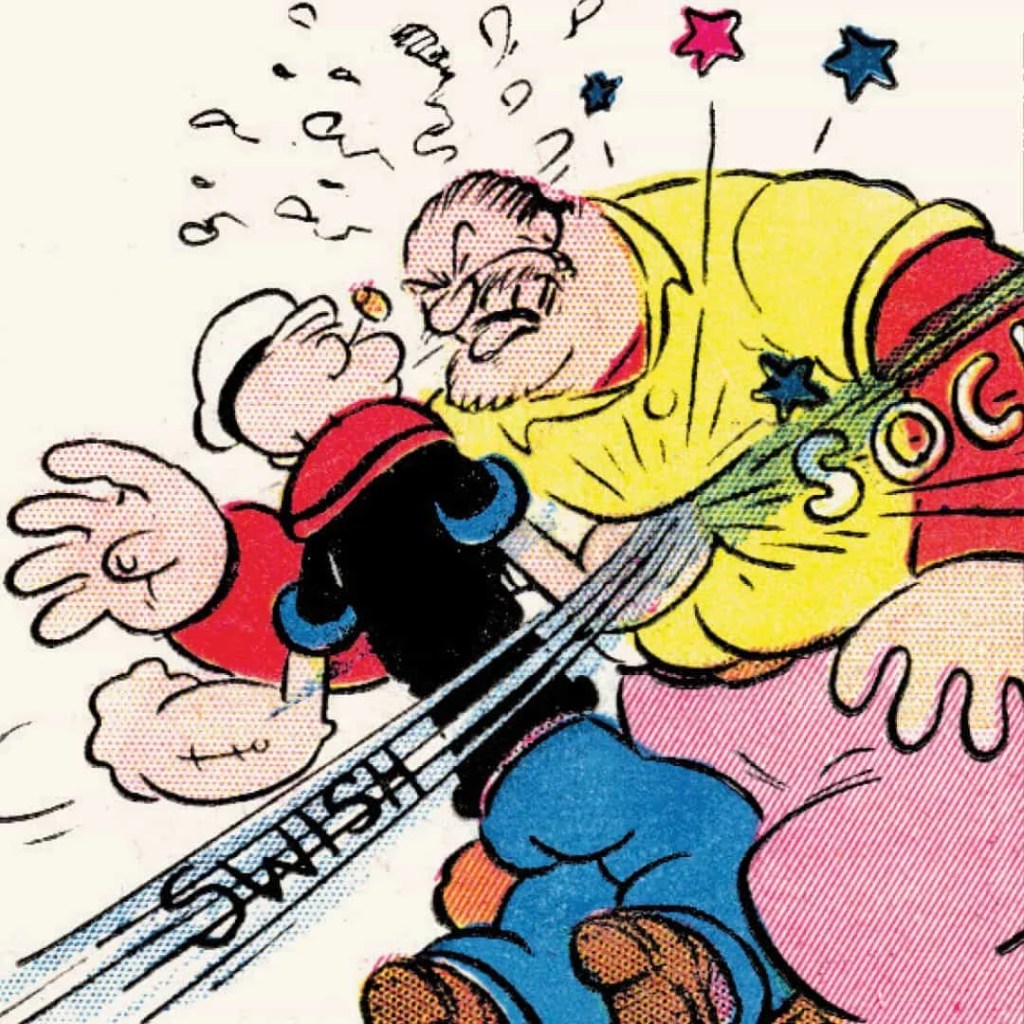
And that memory can be passed along. A parent who remembers Fred or Popeye introduces the characters to a child, giving the next generation its own connection to something that was already old when their parents were kids.
They Don’t Need Television Anymore
This might be the most impressive part. Fred Flintstone and Popeye don’t need a current television hit, a blockbuster movie, or a streaming revival to remind people who they are. They did that work generations ago.
Pop culture usually moves quickly. Characters become popular, get merchandised and eventually disappear when the next big thing arrives. Fred and Popeye found another way to survive because their identities became connected to products people recognize and buy.
They aren’t current stars anymore. They’re familiar faces, and sometimes familiarity is more valuable.
The Cartoon Characters Who Refused to Retire
Popeye has been telling us to eat our spinach for generations, while Fred Flintstone has been helping sell PEBBLES since 1971. Neither one needs to be the hottest character on television because the connection was established long ago.
For a kid, Fred might simply be the funny guy on the cereal box. For a parent, he’s a reminder of Saturday mornings and childhood breakfasts. Popeye works much the same way, except his sales pitch comes with a serving of vegetables.
That’s the strange staying power of these two old cartoon stars. They didn’t just survive their television shows. They became part of our memories, and somehow those memories are still finding their way into our grocery carts.
Recommended Reading
More from Sandbox World
- Saturday Morning Cartoons
- Popeye Variations: Not Yer Pappy’s Comics an’ Art Book
- Popeye Enters the Public Domain With Two New Slasher Movies
- The Sugar Bears: When Cereal Mascots Became ’70s Pop Stars
Further Reading
- Post Consumer Brands: The History of PEBBLES
- Post Consumer Brands: PEBBLES Turns 55
- Popeye Official History
- Smithsonian: Popeye Spinach Label
Discover more from Sandbox World
Subscribe to get the latest posts sent to your email.