

My first exposure to Hammer Films as a kid was Quatermass and the Pit. I was drawn into that strange world of science fiction, mystery and things that probably shouldn’t be crawling around beneath the ground. From there, Hammer became part of my movie-watching life, especially those Saturday afternoons and late-night television screenings. It was a different time. You watched what was on, hoped it was something good and, if you were lucky, discovered a film that stayed with you for years.
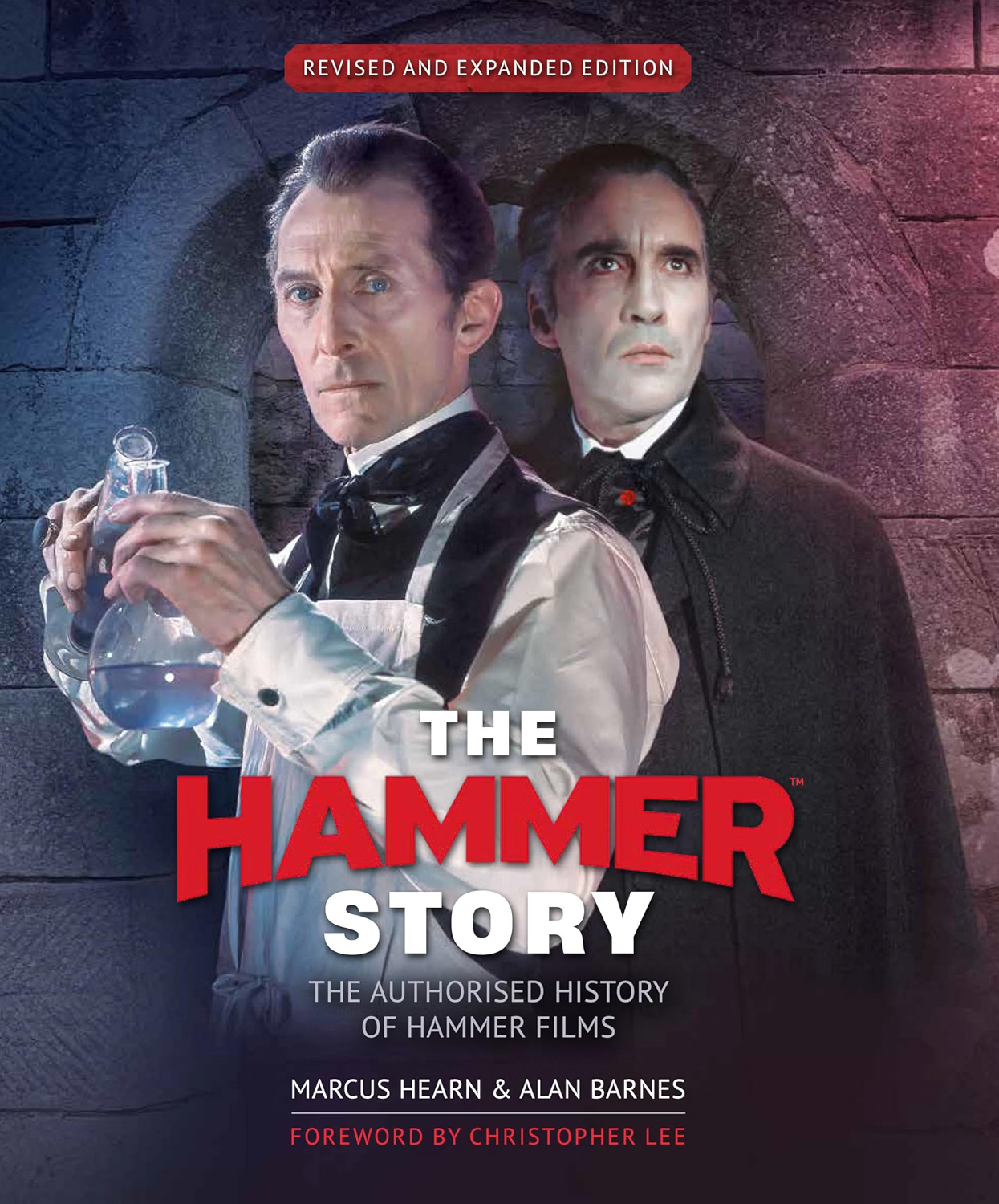
That’s probably why I found myself spending so much time with The Hammer Story: The Authorised History of Hammer Films by Marcus Hearn and Alan Barnes. The new revised and expanded edition from Titan Books brought back plenty of memories, but it also introduced me to things I never knew about a studio I thought I knew pretty well. And that’s saying something.
Most Hammer fans will head straight for the Gothic horror, with its castles, vampires, monsters and those wonderful performances from Christopher Lee and Peter Cushing. I enjoyed all of that, naturally, but my tastes often leaned more towards science fiction, strange happenings and unusual adventures. In fact, I sometimes thought these were Hammer’s superior films. True Hammerites might disagree with me, but that’s the beauty of the studio. There was something for everybody.
Two Authors Who Know Their Hammer
A book covering this much history needs people who know what they’re talking about, and Marcus Hearn and Alan Barnes certainly fit the bill. These aren’t two writers who simply watched a few old movies and decided to put together a guide. They are British film historians who have spent decades researching and documenting Hammer.
Hearn is an author and journalist whose work includes subjects such as Doctor Who, Gerry Anderson, George Lucas and James Bond. He has also written several books devoted to Hammer, including The Art of Hammer, The Hammer Vault and Hammer Glamour. Barnes has an equally interesting background, working as a writer and comic scriptwriter for 2000 AD and Doctor Who Magazine, as well as writing Sherlock Holmes on Screen.
The original The Hammer Story appeared in 1997, following research that began with access to Hammer’s archives at Elstree Studios in 1996. At a time when the studio was largely dormant, Hearn and Barnes were helping preserve a history that deserved more than a dusty corner in the film archives.
And the research shows. Hearn has described working with an archive containing tens of thousands of photographs and documents, including a spreadsheet of more than 20,000 archive and rights entries. Around 800 images were eventually selected for the book. There are production stills, behind-the-scenes photographs and documents that give you a peek at how these films came together. You get the feeling the authors spent an awful lot of time digging through boxes, and thankfully, they brought the interesting stuff along for the ride.
There’s More Hammer Than You Think
The revised edition from Titan Books adds 32 pages, updates the coverage and brings the story up to Doctor Jekyll (2023). It has also been redesigned, re-edited and partly rewritten, so this isn’t simply the old edition with a few extra pages tacked on. The book takes a chronological look at the studio’s feature films and television productions, with cast details, production information and commentary along the way.
I appreciate that Hearn and Barnes don’t treat every film as a lost masterpiece. They give credit where it’s due, but they’re not afraid to point out when a production misses the mark. You get the good, the not-so-good and all the fascinating details in between.
Here’s something I can honestly say: I’ve been back and forth through this book several times, and I keep finding new stuff. There is so much to go through. I have an extensive DVD collection containing many of these films, and I thought I had a pretty good handle on the Hammer catalogue. Apparently, I’ve barely scratched the surface!
There are films I remember, others I’ve forgotten and quite a few that make me wonder how they managed to escape my attention in the first place. The photographs alone can send you down a rabbit hole. You start looking up one film, then another, and before you know it, you’ve lost an hour. That’s not a complaint. It’s part of the fun.
Beyond Dracula: Adventures in Other Worlds
One of the things I particularly enjoy about Hammer is that the studio wasn’t content to stay in the Gothic horror business. It ventured into prehistoric worlds, lost civilizations, science fiction and exotic adventures. Films such as She (1965), One Million Years B.C. (1966), with Raquel Welch, and When Dinosaurs Ruled the Earth (1970) offered something quite different from the usual vampire business.
There were dinosaurs, stop-motion creatures, mysterious lands, dangerous journeys and, let’s be honest, some rather memorable leading ladies in fur bikinis. What more could a young movie fan ask for? These films had a sense of adventure that appealed to anyone who enjoyed escaping into another world for an afternoon. They also showed that Hammer could attract audiences without having to put Dracula in every second production.
But there’s another thing you notice when looking through the photographs, costumes and production details in this book. You have to admire the people behind the scenes and what they managed to accomplish with the budgets they had. The props, costumes, sets and locations make you wonder how they pulled it off. They certainly knew how to stretch a buck, or in this case, a pound! Some of the things they created on those modest budgets would probably have a production manager at a major studio today reaching for the smelling salts.
Hammer had a remarkable group of regular creative talents working around Bray Studios. Director Terence Fisher gave many of its supernatural stories a brisk pace and a grounded feel, while writers such as Jimmy Sangster and Anthony Hinds helped turn familiar Gothic material into sharper, faster-moving thrillers. Then you had production designer Bernard Robinson and cinematographers Jack Asher and Arthur Grant, who worked wonders with sets, lighting and clever camera tricks. Recycling sets, using forced perspective and making the most of Eastmancolor helped create those rich, atmospheric worlds without spending a fortune.
And let’s not forget the people who gave Hammer its unmistakable look and sound. Makeup artists Philip Leakey and Roy Ashton brought its creatures and characters to life, visual effects man Les Bowie worked his magic, and composer James Bernard supplied those thunderous musical scores. You could almost feel the walls shaking when his music kicked in. When you see what this team achieved with the resources available, you can’t help but admire their ingenuity.
This book also reminds you how many writers, actors and filmmakers came together to hammer out some of cinema’s most memorable adventures. It puts the studio into the context of its time, too. After years of wartime austerity and restrictions on certain types of horror films, audiences were ready for something different. The old-fashioned, polite screen monster was losing its bite, and Hammer recognized an opportunity to give moviegoers something a little more daring.
The Pleasure of Being Shocked
Hammer gave audiences blood, colour, sexuality and shocks, sometimes in quantities that made critics and censors uncomfortable. The British Board of Film Censors pushed back against a number of the studio’s scripts during the late 1950s. What young audiences found exciting and rebellious, many adults considered vulgar, excessive or simply bad taste.
I suppose that’s part of what made Hammer so much fun. We knew the monsters weren’t real. We knew the blood was theatrical and the special effects weren’t always going to fool anybody. We were kids, not idiots! We didn’t need everything to look convincing. We were there for the adventure, the atmosphere and the occasional monster popping out when we least expected it.
And then there were the stories borrowed from the literary world. Bram Stoker, Mary Shelley, H.P. Lovecraft, Arthur Conan Doyle, Dennis Wheatley, Sheridan Le Fanu and Robert Louis Stevenson all belong to the wider literary tradition that helped shape horror, fantasy and adventure on screen. Some became direct Hammer adaptations, while others helped establish the imaginative territory in which the studio operated.
Hammer brought many of these literary creations to a new audience, sometimes with its own interpretation of the material. I always figured Bram Stoker and Mary Shelley weren’t collecting royalties every time Dracula or Frankenstein appeared on screen, but their creations certainly kept the movie business busy!
A Legacy That Refuses to Die
Hammer’s fortunes changed over the years. Its production output declined in the late 1970s, but the films never really disappeared. They continued to find audiences through late-night television, VHS tapes and DVDs. Eventually, the studio began making films again. Wake Wood premiered in 2009 before its UK theatrical release in 2011, marking Hammer’s return to cinema after a long absence. It was followed by Let Me In (2010) and The Woman in Black (2012), starring Daniel Radcliffe.
For many of us, Hammer never really went away. The films became part of our movie memories, and new generations discovered them through home video, television and modern restorations. Some of the old productions may look a little different today, but their atmosphere, characters and storytelling still have a way of pulling you in.
A Book Worth Keeping
What I like most about The Hammer Story is that it has sent me back to films I already know while introducing me to a whole collection of others. I thought my DVD shelf gave me a pretty good picture of Hammer’s output. This book has made me realize just how much more there is to explore.
I’ve already spent hours going through the pages, and I suspect I’ll be returning to them for quite some time. That’s a pretty good sign when a book about films you thought you knew keeps giving you new reasons to look again.
This is one book you want to buy. And if you already own an earlier edition, I wouldn’t hesitate to recommend the revised version. The extra material, updated coverage and redesigned presentation make it well worth having. Besides, you can never have too much Hammer in your collection. Some things never really die. Dracula knows that better than anyone.
Discover more from Sandbox World
Subscribe to get the latest posts sent to your email.