


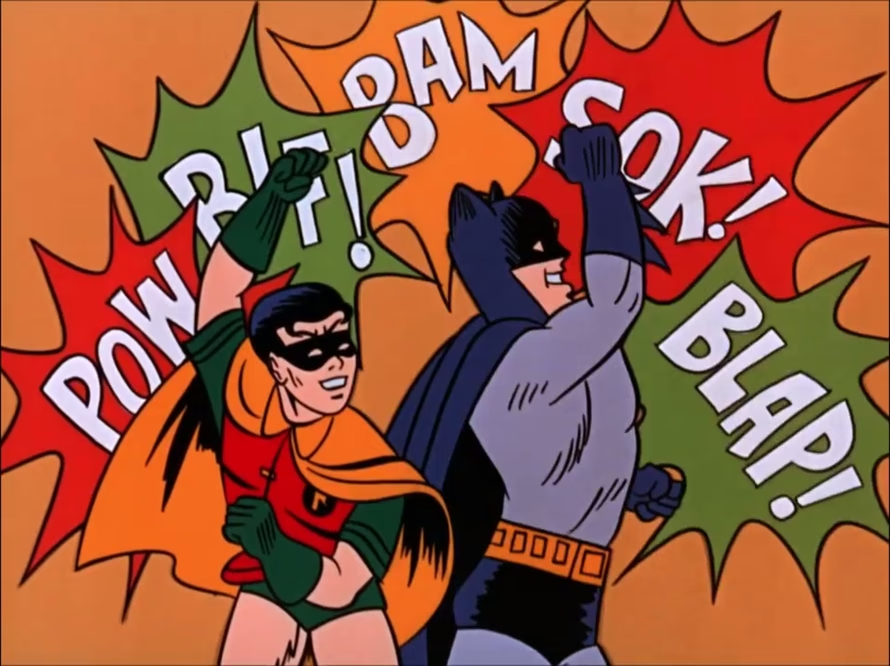
Remember the original Batman TV series? Every time Batman or Robin landed a punch, the screen would explode with giant words like POW!, BAM!, WHAM!, and SOCK! It was impossible to miss them. As a kid, I thought they were just goofy visual gags. It turns out they were part of a much larger comic book language that most people never think about.
Those loud action words are called onomatopoeia. Yes, it’s a big word for something so simple. An onomatopoeia is a word that sounds like the noise it’s describing. In comics, they’re the sound effects that practically leap off the page. Whether it’s a KABOOM!, a CRASH!, or a THWACK!, these words help bring static images to life.
The funny thing is that comic books have developed an entire vocabulary over the decades. Some terms have become mainstream, but many are still known only by collectors, creators, and hardcore fans.

Take speech bubbles, for example. Most people know what they are, but comic creators usually call them word balloons. The little pointer attached to the balloon is called a tail, and it identifies who’s speaking. Then there are thought balloons, those fluffy cloud-shaped bubbles connected by a trail of little circles that show what a character is thinking.
If you’ve ever seen a character screaming in a comic, you’ve probably noticed the speech balloon suddenly becomes jagged and explosive. Those are called burst balloons, and they’re designed to make the words feel louder before you even read them.
One of my favorite obscure comic terms is emanata. Chances are you’ve seen emanata thousands of times without knowing the name. They’re the little visual symbols artists use to communicate emotions and actions. Sweat drops flying off a nervous character. Stars circling someone’s head after they get bonked. Motion lines showing speed. Even the classic light bulb above someone’s head counts as emanata. It’s visual shorthand, and comic artists have been using it for generations.
Collectors have their own language, too.
What most people simply call comic books are often referred to as floppies. These are the thin, stapled monthly issues that arrive in comic shops every week. If those issues are collected together, they often become trade paperbacks, or TPBs. Many readers buy these from bookstores without realizing they’re different from graphic novels, which are typically original stories rather than collections.
Then there’s the mysterious pull list. If you’re a regular customer at a local comic shop, you can create a personalized list of titles you want every month. The store automatically sets aside copies for you, ensuring you never miss an issue.
And if you’re really serious about collecting, you’ve probably heard of slabbing. That’s when a comic is professionally graded and sealed inside a hard plastic case. Once it’s slabbed, you’re no longer reading it. You’re preserving it.
Comic books even have their own architectural terms.

The empty spaces between panels are called gutters. They may not look important, but they’re one of the medium’s secret weapons. Your brain automatically fills in what happens between panels, creating movement and the passage of time.
Then there are splash pages, which are exactly what they sound like. One giant image taking up an entire page, usually reserved for dramatic reveals, epic battles, or moments publishers really want you to remember.
A full bleed takes things even further. That’s when artwork extends all the way to the edge of the page without any borders, creating an even bigger visual impact.
The industry itself has its own collection of insider jargon.
Comic fans often refer to Marvel and DC as The Big Two. Retailers obsess over something called FOC, or Final Order Cutoff, which is the last chance stores have to lock in their orders before a comic goes to print. In many cases, those early orders can determine whether a new series thrives or quietly disappears.
Then there’s decompression, a term that gets comic fans debating faster than almost anything else. Older comics often squeezed an entire adventure into a single issue. Modern stories tend to unfold more slowly across multiple issues, allowing artists to tell much of the story visually. Some readers love it. Others miss the days when every page was packed with dialogue and plot twists.
Finally, there’s the indicia. You’ve probably seen it without realizing it. It’s the tiny block of legal text tucked away inside a comic that contains publication information, copyright details, and issue numbers. It’s about as exciting as reading a phone book, but collectors pay attention to it.
What I love about comic books is that they’re more than stories and artwork. They’ve built an entire culture with its own language, traditions, and quirks. The average reader may know terms like “graphic novel” or “multiverse,” but once you start digging deeper, you discover a whole world of fascinating jargon hiding in plain sight.
So the next time you pick up a comic book, pay attention to the gutters, the splash pages, the emanata, and especially the giant POW! exploding across the page.
Discover more from Sandbox World
Subscribe to get the latest posts sent to your email.