


One of the things my daughter and I have always bonded over is comic books. We can lose an entire evening talking about superheroes, arguing over which movie finally got a character right, or debating questions that most people probably never stop to ask. That’s half the fun of being comic book geeks. One innocent observation almost always leads to another, and before you know it, we’re both disappearing down another rabbit hole.
The other night, we weren’t talking about who would win in a fight or which superhero had the best powers. Instead, my daughter looked at me and asked, “Have you ever noticed how many comic book villains wear green and purple?”
At first, I laughed.
It sounded like one of those random observations that couldn’t possibly be true. Then we started naming characters. The Joker was the obvious choice. The Green Goblin quickly followed. Lex Luthor, Doctor Doom, Brainiac, and, before long, we were adding Disney villains to the list because they also seem strangely attracted to glowing green magic and deep purple robes.

After about five minutes, we both stopped and looked at each other.
“Wait a minute…”
This couldn’t just be a coincidence.
That’s the dangerous thing about comic books. One simple question has a habit of leading you somewhere completely unexpected. I thought I was going to spend a few minutes looking up costume colors. Instead, I somehow ended up reading about old printing presses, medieval royalty, Shakespeare, and the psychology of color. Only comic books can send you on a journey like that.
The funny thing is, there was never a secret meeting where comic book artists got together and officially declared green and purple the colors of evil. The real answer is much more interesting because it combines the limitations of early printing technology with hundreds of years of symbolism that artists instinctively understood.
Back when comic books first appeared on newsstands, they weren’t glossy collector’s items. They were printed on inexpensive newsprint using printing presses that didn’t always reproduce colors perfectly. Artists quickly discovered which colors stayed bold and which ones faded into the paper, so bright primary colors naturally became the home of many superheroes.
Think about the heroes almost everyone recognizes. Superman proudly wears red, blue, and yellow. Spider-Man swings through New York in bright red and blue. Captain America practically wraps himself in the American flag. Before any of these heroes throws their first punch, the artwork has already told you they’re the good guys.
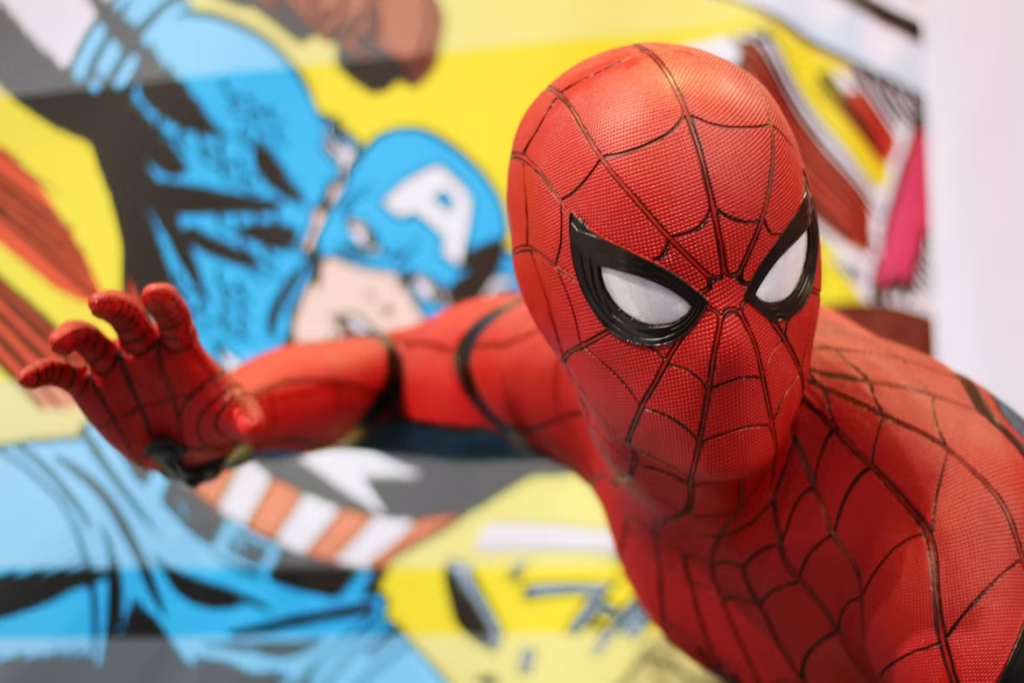
That created another opportunity. If the heroes were immediately recognizable, the villains needed to stand apart just as quickly. Green and purple created a striking visual contrast, and over the years, they quietly became part of comic books’ visual language. Whether artists planned it that way or simply kept repeating a combination that worked, readers learned to associate those colors with danger long before the villain delivered an evil laugh.
The more I dug into it, the more fascinating it became. Green has always lived two completely different lives. Walk through a forest and it’s the color of life, growth, and renewal. Walking into a comic book laboratory and it usually means somebody is about to mutate into a twelve-foot monster.
Seriously, have you ever noticed that dangerous chemicals in comic books are rarely blue? They’re almost always glowing green. Apparently, comic book scientists refuse to conduct reckless experiments unless everything in the room looks radioactive.
Purple carries an entirely different history. Hundreds of years ago, it was one of the most expensive dyes in the world, making it the color of kings, emperors, and the wealthy elite. It represented power, status, ambition, and authority. Put those two colors together and you’ve practically dressed someone who believes the world belongs to them.
Of course, comic books have always enjoyed breaking their own rules. Halfway through our conversation, my daughter smiled and said, “What about Green Lantern?”
She had me there.
Green isn’t automatically evil. For Green Lantern, it represents willpower, courage, and determination. That’s one of the reasons comics stay interesting decade after decade. They establish familiar patterns, then occasionally flip them upside down just to keep readers guessing.
By this point, though, we’d wandered into another mystery that honestly bothers me even more than villain colors.

Who is making these costumes?
This is where my suspension of disbelief finally starts to wobble. I can accept flying aliens, radioactive spiders, billionaire vigilantes, and talking raccoons without much trouble. The one thing I struggle to believe is that Peter Parker somehow finds the time, money, and sewing skills to create a perfectly fitted Spider-Man suit while wondering how he’s going to pay next month’s rent.
I have trouble sewing a button back onto one of my shirts without making it look worse than before I started. Peter Parker apparently designs movie-quality costumes complete with raised webbing, matching gloves, boots, and a mask that survives weekly battles with supervillains. Somewhere between getting bitten by a radioactive spider and graduating high school, he must have completed an advanced tailoring course that Marvel never bothered to mention.
Batman doesn’t exactly make the mystery any easier to solve. Every night, his cape hangs perfectly. His cowl fits flawlessly. His gloves, boots, utility belt, and armor always look factory fresh despite spending the evening jumping off rooftops and getting punched by Bane. Alfred deserves far more credit than he gets because somebody has to keep repairing all that gear.
Even the villains somehow manage to stay impeccably dressed. The Joker always has another perfectly tailored purple suit waiting in the closet despite his frequent stays at Arkham Asylum. Doctor Doom keeps a flowing green cape looking majestic while wearing several hundred pounds of metal armor. The Riddler’s suit never seems to wrinkle. Maybe the greatest hidden superpower in comics isn’t flight or super strength after all. Maybe it’s expert tailoring.
By the time our conversation finally came to an end, neither of us had completely answered the original question. In fact, we’d probably created ten new ones. Somehow, a simple observation about costume colors turned into a discussion about printing presses, Shakespeare, medieval royalty, psychology, and sewing machines. That’s exactly why I’ve loved comic books for as long as I can remember.
The next time you pick up a comic book, slow down before the first punch is thrown. Take a good look at the costumes because the artist has probably already started telling you the story long before anyone says a word. And if you ever happen to meet the mysterious tailor responsible for outfitting half the Marvel and DC Universes, please let me know.
I have a few shirts hanging in my closet that could really use superhero-quality alterations.
Discover more from Sandbox World
Subscribe to get the latest posts sent to your email.