
Some people will lock themselves in the basement, shut out the rest of the world and disappear for a week playing the latest release of Grand Theft Auto. Others will saddle up and spend their time exploring the world of Red Dead Redemption. Me? I’d happily combine both experiences, only I’d go back to where much of that cinematic magic began: Sergio Leone’s Wild West.
Just close your eyes for a second and imagine it. A dusty frontier town, a lone gunfighter riding into the sunset, a saloon full of troublemakers and that unmistakable tension before somebody reaches for a six-shooter. If any of this sounds familiar, there’s a reason. The Spaghetti Western helped establish the visual language that modern Western games would later embrace.
Rockstar Games brought many of those cinematic ingredients into the Red Dead universe. Red Dead Revolver embraced the Spaghetti Western tradition, with its dramatic duels and stylized atmosphere. Red Dead Redemption took the open-world ambition of GTA and transported it to the Old West. Replace the cars with horses, automatic weapons with six-shooters and city streets with endless desert landscapes. Suddenly, you’re living inside a Sergio Leone movie.
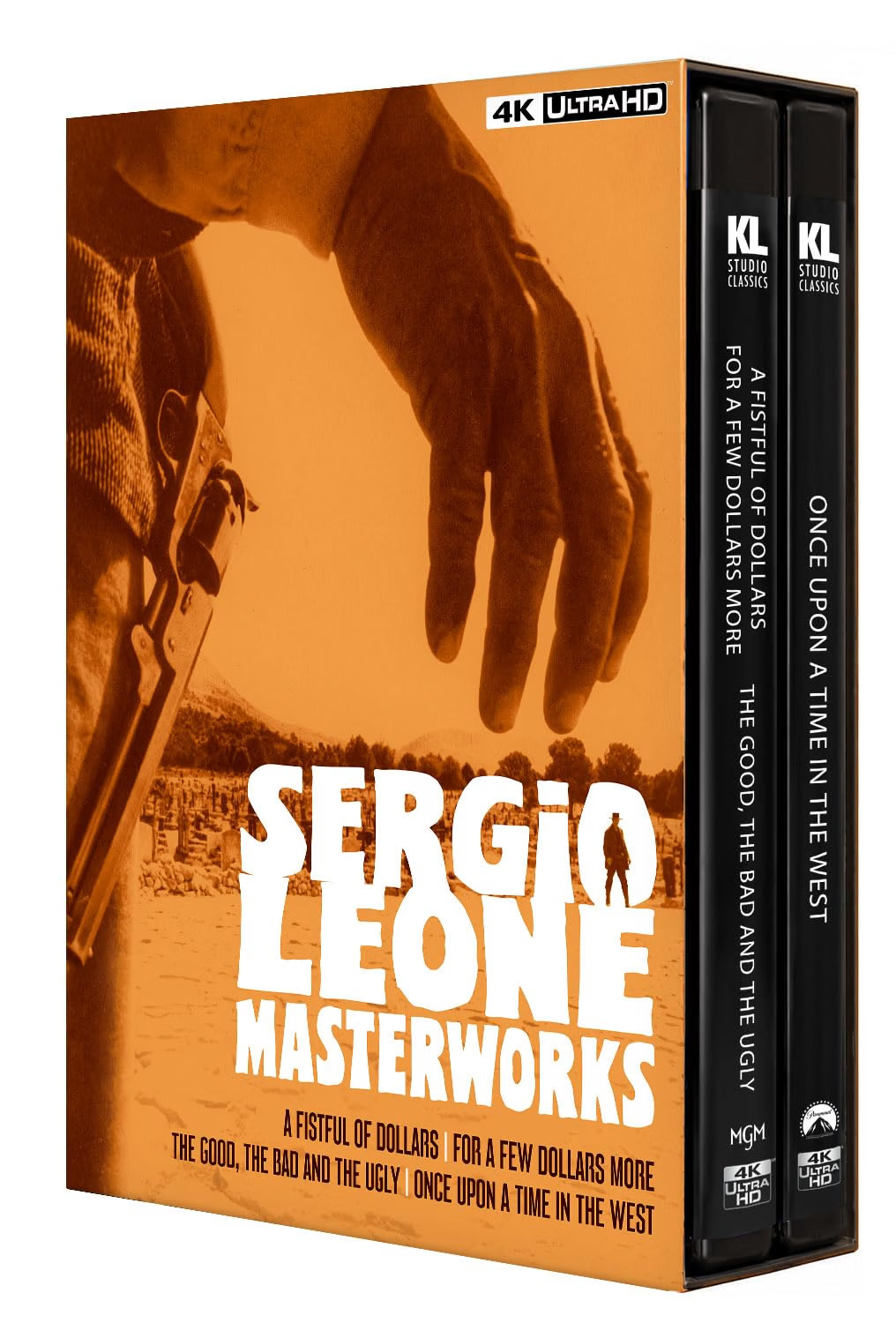
And that’s exactly why the Sergio Leone Masterworks collection caught my attention. It brings together four films from one of Italy’s greatest filmmakers, released between 1964 and 1968. Think about that for a moment. In just four years, Leone helped turn the Spaghetti Western into an international phenomenon and delivered some of the most influential Westerns ever made.
The landscapes, larger-than-life characters, sudden bursts of violence and unforgettable music all contribute to the experience. This is the original open-world Western, except the graphics are made of film, the soundtrack is by Ennio Morricone and nobody is waiting for a software update.
There is no major studio today that I can imagine producing a run of movies like this. Leone had his own visual language and an extraordinary understanding of how to build tension. Those extreme close-ups, long silences and dramatic showdowns became part of his signature. Morricone’s music wasn’t simply background accompaniment. It was another character in the story.
The collection features Clint Eastwood, Lee Van Cleef, Eli Wallach, Henry Fonda, Claudia Cardinale, Jason Robards and Charles Bronson. That’s quite a lineup.
Disc 1: A Fistful of Dollars (1964)
This is where the world meets Clint Eastwood’s Man with No Name. A lean, cold-eyed, cobra-quick gunfighter drifts into a grim border town controlled by two rival gangs. Both sides think they can buy his services, but they soon discover that this stranger has a few tricks of his own. Leone’s breakthrough Spaghetti Western helped launch Eastwood into international stardom.
Disc 2: For a Few Dollars More (1965)
Eastwood returns alongside Lee Van Cleef as two rival bounty hunters who join forces to track down the murderous bandit El Indio and his gang. Naturally, things are never quite as straightforward as they appear. The second chapter of the Dollars trilogy raises the stakes with a memorable partnership and one very dangerous criminal.
Discs 3 and 4: The Good, the Bad and the Ugly (1966), Theatrical and Extended Cuts
Now we’re talking. Eastwood, Lee Van Cleef and Eli Wallach are chasing a hidden fortune of $200,000 against the backdrop of the American Civil War. Greed, betrayal and shifting alliances lead to one of cinema’s most legendary showdowns. Having both the theatrical and extended cuts makes this a particularly welcome addition for fans.
Disc 5: Once Upon a Time in the West (1968)
Leone takes the Western to another level with this magnificent frontier epic. Henry Fonda turns his familiar good-guy image upside down as Frank, a cold-blooded killer. Claudia Cardinale, Jason Robards and Charles Bronson round out a remarkable cast. Bronson’s Harmonica is one of those characters who doesn’t need to say much to command a room. With its sweeping Monument Valley scenery and deliberate storytelling, this is Western filmmaking on a grand scale.
Disc 6: Bonus Features
There’s also a dedicated Blu-ray disc packed with additional material, including interviews, documentaries, archival features, location comparisons, image galleries and trailers. For anyone interested in how these films were made and how Leone developed his distinctive style, there’s plenty more to explore.
The original open-world experience
What makes these films endure is that they are about much more than shootouts and dusty streets. Leone understood that silence could be just as powerful as dialogue, that a close-up could tell an entire story and that music could turn a simple showdown into cinema history.
When you play Red Dead Redemption, you’re exploring a world that feels familiar because generations of filmmakers helped establish its visual vocabulary. Leone was one of the most important architects of that cinematic tradition. His influence on the genre is worth revisiting in Sergio Leone: The Revolution of the Western.
Morricone’s music deserves a story of its own, too, as explored in Once Upon a Time in the West: When Music Led the Film. And Eastwood’s screen toughness carried well beyond the Spaghetti Westerns, as my look at Cinema Retro Movie Classics makes clear.
Four films, six discs and a legacy that continues to influence filmmakers and game developers. If you’re going to disappear for a week, you could do a lot worse than spending it with Sergio Leone.
Sorry, GTA. This time I’m taking the cinematic route. No missions to complete, no horses to feed and no wanted posters to worry about. Just a big screen, a good sound system, Ennio Morricone turned up loud and a whole lot of Wild West attitude.
Now that’s my kind of gaming!
Discover more from Sandbox World
Subscribe to get the latest posts sent to your email.