

There’s no sugarcoating it, Soylent Green hit different when you were a kid. It wasn’t just another sci-fi flick; it felt like a warning—a snapshot of where we might be headed if things kept spiraling. Back in 1973, the world had around 4 billion people. Fast forward to 2022 and we’ve blown past 8 billion. That kind of growth doesn’t just change skylines, it changes everything. Resources, cities, the way we live and compete just to get by.
The film drops you into a version of New York City in 2022 packed with 40 million people. It’s hot, crowded, tense, and running on fumes. Food is scarce, water is rationed, and the divide between the haves and have-nots is brutal. The elite are sealed off in clean, controlled spaces while everyone else lines up for processed wafers churned out by the Soylent Corporation. Soylent Red. Soylent Yellow. And then the new thing everyone’s chasing, Soylent Green. You can feel the desperation baked into every scene.
What really stands out now is how ahead of its time it was. This was one of the first Hollywood films to actually say the words “greenhouse effect” out loud and build a world around climate collapse. It also casually slipped into gaming history with a glimpse of Computer Space, marking one of the earliest video game appearances in a movie. Small detail, big legacy.
Directed by Richard Fleischer, whose career bounced from epics like The Vikings to chilling true crime with 10 Rillington Place, this one lands with a sting that still hasn’t faded. At the center is Detective Robert Thorn, played by Charlton Heston, digging into a murder that slowly unravels something much darker. It sits alongside Planet of the Apes and The Omega Man as part of Heston’s unofficial dystopian trilogy, each one chipping away at the idea of human progress.
And then there’s the human side behind the camera. Edward G. Robinson, who played Sol Roth, was terminally ill during filming. His final scene hits even harder when you realize it was shot just days before he passed. That moment doesn’t feel like acting. It lingers.
The story itself came from Make Room! Make Room!, where “soylent” originally just meant a mix of soybeans and lentils. No horror twist. Just survival food. Decades later, reality-blurred fiction when Rob Rhinehart launched Soylent as a real-world experiment in nutrient efficiency. Not quite the same vibe, but the name alone tells you how deep the film’s impact runs.
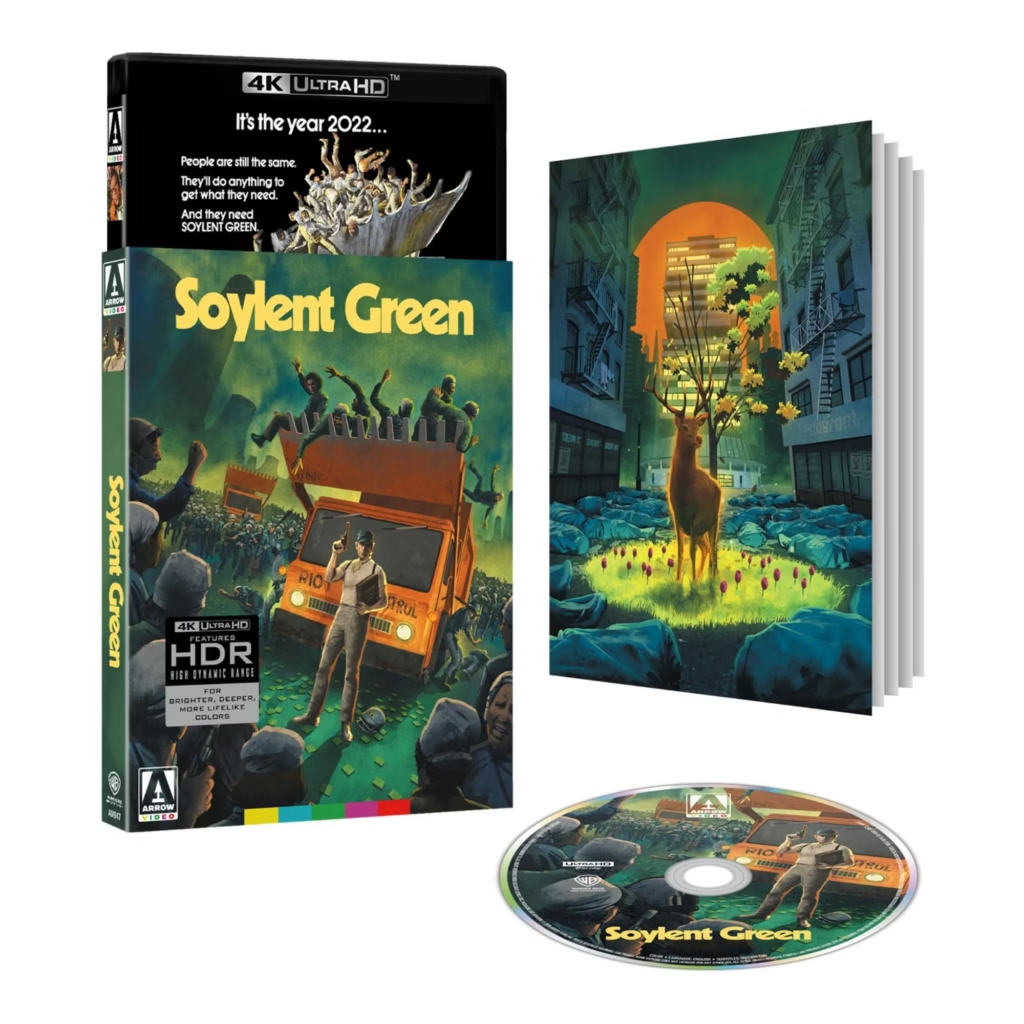
And now it’s coming back around. Arrow Video is rolling out a new 4K Ultra HD restoration sourced from the original 35mm negative, scheduled for release on July 27, 2026. This is the kind of film where the grit matters. The strange color palette, the haze, the lived-in decay. Seeing that cleaned up without losing its edge might make it feel even closer to home.
“IT’S THE YEAR 2022… PEOPLE ARE STILL THE SAME.”
That line wasn’t just marketing. It was the thesis. And decades later, it still lands a little too close.

If this article made you think, brought back a memory, or made you see something differently, I’d love to hear from you. Send me an email at sandboxworld@gmail.com. I read every message personally and, with your permission, may feature your thoughts in a future article because the best stories are the ones we share.
Discover more from Sandbox World
Subscribe to get the latest posts sent to your email.