



World Bee Day is celebrated every year on May 20th and was established by the United Nations to raise awareness about the essential role bees play in global food security, biodiversity, and healthy ecosystems. It is also a moment to recognize and support local pollinators that quietly sustain much of what we eat and see growing around us.
The date was chosen to honor Anton Janša, a pioneer of modern beekeeping from Slovenia, who was born on May 20, 1734, and helped shape early beekeeping practices. It also aligns naturally with the Northern Hemisphere spring season, when flowers are blooming, and bees are most active, making it a fitting time to highlight their importance in nature’s cycle.
Long before modern environmental movements existed, pioneers like Anton Janša understood how important bees were. Janša helped shape modern beekeeping in the 18th century through innovative hive designs and influential writings that educated generations of beekeepers across Europe. His work helped transform apiculture into both a science and an art.
When we were kids, catching bees in mason jars felt completely normal. We would poke tiny holes in the metal lid so they could breathe, stare at them for a few minutes, then let them go back into the summer air. Back then, bees seemed endless. They buzzed around every garden, every park, every field like tiny workers keeping the world alive without any of us really noticing.

Fast forward 50 years and things feel very different.
Bee populations are declining because of climate change, pesticides, habitat loss, and changing ecosystems. What once felt ordinary has quietly become fragile. The scary part is that bees are not just part of nature’s background soundtrack. They are one of the most important links in the entire food chain.
Without bees and other pollinators, farms struggle, crops shrink, and food prices rise. Fruits, vegetables, nuts, and countless plants depend on pollination to survive. If bee populations continue to fall, the economic impact alone would be massive. Bees contribute an estimated $27 billion annually to the North American economy through pollination, while pollinators overall contribute roughly $34 billion each year to the U.S. economy. That is not just environmental talk. That is grocery stores, farming communities, local markets, and food security, all connected to one tiny insect.
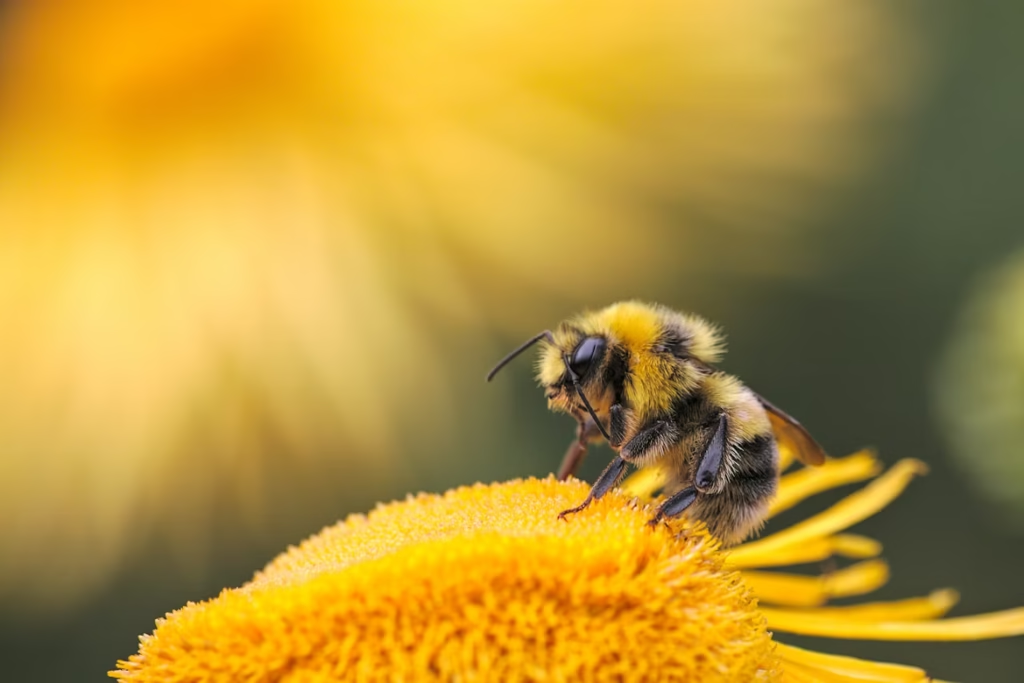
The reality is simple. No bees, no food system as we know it.
Every city should become more bee-friendly. More green roofs. More wildflowers. Fewer pesticides. More urban gardens. Even small patches of pollinator-friendly plants can help rebuild habitats inside busy cities that were once entirely covered in concrete.
It is strange how something we once trapped in a mason jar for fun has become one of the biggest warning signs for the future of the planet.
Maybe saving the bees is not just about insects anymore. Maybe it is about saving the balance itself.

If this article made you think, brought back a memory, or made you see something differently, I’d love to hear from you. Send me an email at sandboxworld@gmail.com. I read every message personally and, with your permission, may feature your thoughts in a future article because the best stories are the ones we share.
Discover more from Sandbox World
Subscribe to get the latest posts sent to your email.