
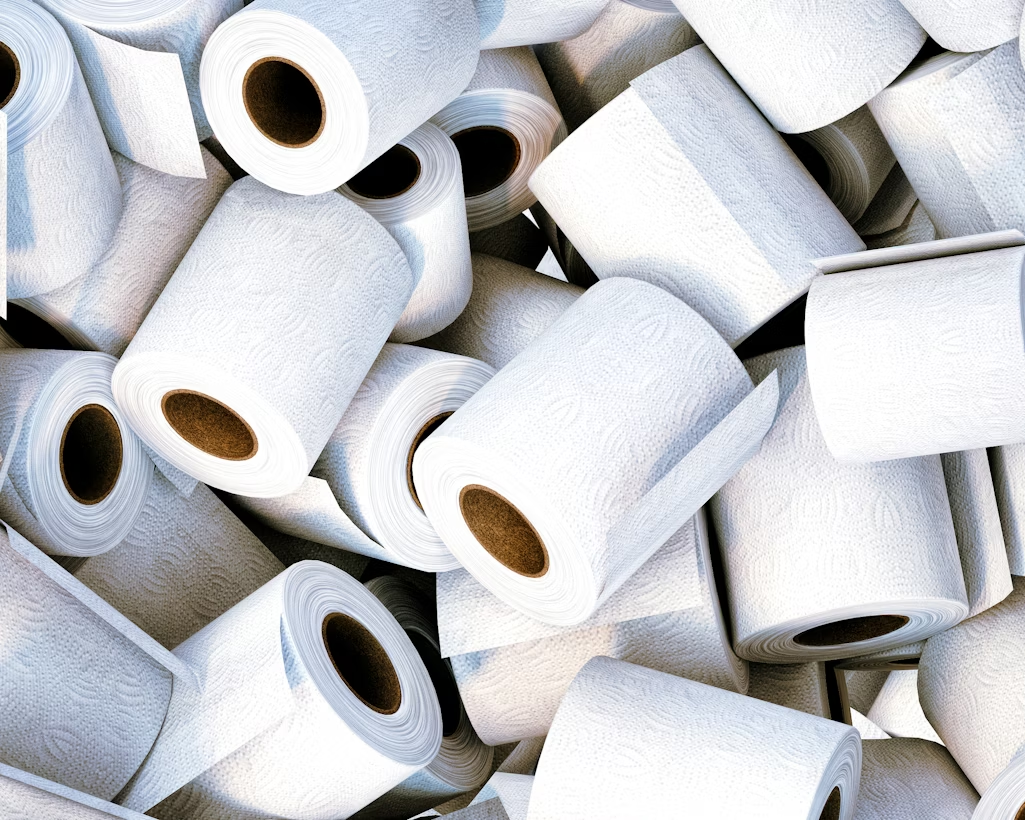
I went down a bit of a rabbit hole with The Process, and this one really stuck with me. It digs into the history of toilet paper, how it’s made, and why something as simple as a bidet never quite caught on in the United States. And honestly, the answer is weirder than you’d expect.
The United States is about four percent of the world’s population, but somehow burns through roughly twenty percent of the global toilet paper supply. At the same time, about seventy percent of the world isn’t using toilet paper at all. They’re using water. A basic bidet attachment runs you maybe thirty-five bucks. A year of toilet paper is closer to a hundred and twenty. And still, most people don’t even consider switching.
And then you hit that stat that just kind of sits there in your brain.
So how did that happen?
A lot of it traces back to World War II, but not in the way you’d think. American soldiers encountered bidets overseas, mostly in French brothels. That detail stuck. It gave the bidet this weird reputation right out of the gate. Not practical. Not everyday. Something a little off to the side of polite conversation.
And once that idea settles in, it’s hard to shake.
Then the war ends. Everyone comes home. The suburbs boom. Houses go up fast, bathrooms included, but nobody’s designing them with bidets in mind. That moment passes. Toilet paper fills the space, and just like that, it becomes the default. No big decision. No debate. Just momentum doing its thing.
Here’s the part that really throws you if you stop and picture it.
Over a lifetime, say around 75 years, the average person produces enough waste to fill about 40 to 50 percent of a standard 20-foot shipping container. Not compacted. Just… naturally piling up, air gaps and all. It’s one of those facts that sounds ridiculous until you realize it probably isn’t.

And then there’s the modern snapshot of all this.
Kirkland Signature bath tissue is the top-selling item at Costco, moving over a billion rolls a year and pulling in more than 400 million in revenue. You see it every time you go. Those giant packs stacked high in shopping carts are like it’s the most normal thing in the world.
Which, I guess, it is.
That’s the part I keep coming back to. None of this was really a conscious choice about hygiene or cost or even comfort. It was timing. A bit of cultural baggage. And a whole lot of people just went along with what was already there.
Meanwhile, most of the world is using water and probably looking at us like we missed a pretty obvious upgrade somewhere along the line. So yes, maybe leave a little water for the fish, a little for the AI cooling systems working overtime, and hopefully enough for the factories to keep churning out more toilet paper so the cycle can continue like nothing ever happened.
Discover more from Sandbox World
Subscribe to get the latest posts sent to your email.