

Every Canada Day, I find myself thinking about the little things that make this country feel different.
For some people, it’s the first taste of maple syrup on a stack of pancakes or the sight of a loon gliding across a quiet lake. Others think about weekends at the cottage, road trips across the country, or fireworks lighting up the night sky. For me, one image always comes to mind.
A frozen outdoor rink.
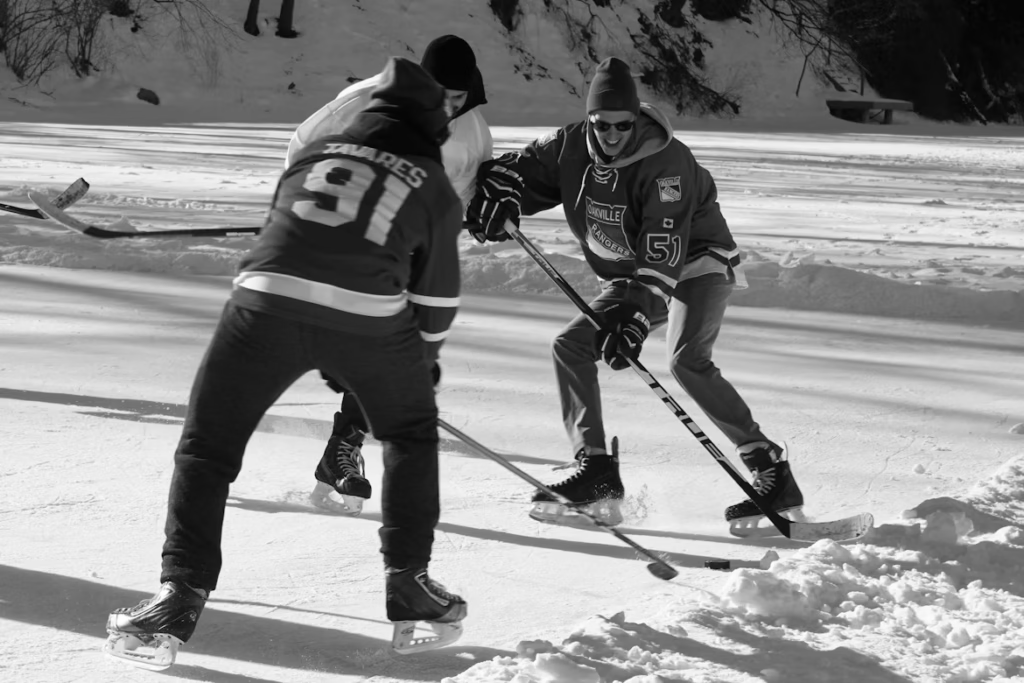
Long before organized practices, expensive equipment and televised games, hockey belonged to neighborhoods. Someone would flood a patch of ice, a couple of old nets would magically appear and, before long, kids would arrive carrying sticks over their shoulders. Teams were picked in seconds, the goalies rarely volunteered and every close play sparked the inevitable debate over whether the puck had crossed an imaginary goal line.
Those games didn’t need scoreboards or referees. They simply needed enough daylight for one more period before someone yelled from the porch that supper was ready.
For generations of Canadians, that’s where hockey truly began.
As we grew older, the game became woven into everyday life. Parents bundled sleepy children into cars before sunrise for early morning practices. Volunteers spent evenings maintaining community rinks while coffee became the unofficial fuel of every hockey parent sitting in chilly arenas. Saturday nights belonged to Hockey Night in Canada, and even families who weren’t devoted fans often gathered around the television because that’s simply what Canadians did.

The memories weren’t always about the games themselves. They were about opening a fresh pack of hockey cards and hoping Wayne Gretzky or Mario Lemieux was inside. They were about pretending to make Patrick Roy’s impossible glove saves in the driveway or imagining you had just scored the Stanley Cup-winning goal with a battered stick and a tennis ball. Every generation had its heroes, but every child imagined wearing the sweater of their favorite team.
Even local arenas had personalities all their own. The smell of sharpened skates mixed with popcorn and french fries, the echo of pucks bouncing off the boards and the familiar sound of blades carving fresh ice created memories that somehow stayed with us long after we grew up. Looking back, it’s funny how often we remember those little moments more clearly than the final scores.
Hockey wasn’t just something Canadians played. It became part of our culture.
Movies like Slap Shot captured the rough-and-tumble humor of the sport, while the unforgettable Hanson Brothers became as iconic as many real NHL players. Years later, The Mighty Ducks introduced countless children to hockey, and Goon reminded audiences that beneath every big hit was a surprising amount of heart. Add in Hockey Night in Canada, Tim Hortons hockey cards and countless road trips to community arenas, and it’s easy to see why hockey became woven into the fabric of Canadian life.

Canada shaped the modern game the world now knows as hockey, and its influence remains impossible to ignore. Canadian-born players continue to make up the largest share of NHL rosters, and every June, many of the names engraved on the Stanley Cup belong to players who first learned the game on Canadian ice.
The last Canadian team to win the Stanley Cup was the Montreal Canadiens in 1993.

When Patrick Roy lifted Lord Stanley’s Cup after defeating Wayne Gretzky and the Los Angeles Kings, it simply felt like another championship in Montreal’s remarkable hockey history. No one imagined they were witnessing the beginning of a drought that would stretch across more than three decades. Entire generations of Canadian fans have grown up without seeing a hometown team skate a victory lap with hockey’s greatest prize.
There isn’t one easy explanation. Salary cap parity has made championships harder to win, American franchises have invested heavily in scouting and player development, and factors such as taxes, travel, climate and free agency all influence where players choose to build their careers. At the grassroots level, hockey has also become significantly more expensive. Equipment costs, travel teams and elite programs can place a heavy burden on families, making it more difficult for some children to stay in the game.
Even so, none of those challenges has changed what hockey means to Canada.
Every winter, children still race onto frozen ponds before the sun sets. Parents still spend weekends driving from one arena to another, volunteers still dedicate countless hours to local hockey programs and kids still fall asleep dreaming about one day hearing their names announced at the NHL Draft. Those traditions continue whether the Stanley Cup crosses the border or not.
Maybe that’s the real story.
Canada’s relationship with hockey has never depended solely on championships. It’s built on family, community, tradition and memories that begin long before anyone dreams of playing professionally. The Stanley Cup may spend its summers in American cities these days, but the game’s spirit continues to thrive in Canadian neighborhoods where another generation is learning to skate, shoot and dream.
One day, another Canadian team will finally bring Lord Stanley home. When that happens, it won’t simply end one of the longest championship droughts in sports. It will remind the hockey world of something Canadians have always known.
The Stanley Cup may travel, but hockey will always feel at home in Canada.
Happy Canada Day.
Elbows up!
Discover more from Sandbox World
Subscribe to get the latest posts sent to your email.